The Complete Swimming Pool Installation Guide for Costa Brava Properties
Discover the complete swimming pool installation guide for Costa Brava properties. Expert tips on permits, design, costs, and construction tailored to the region.
31 October 2026
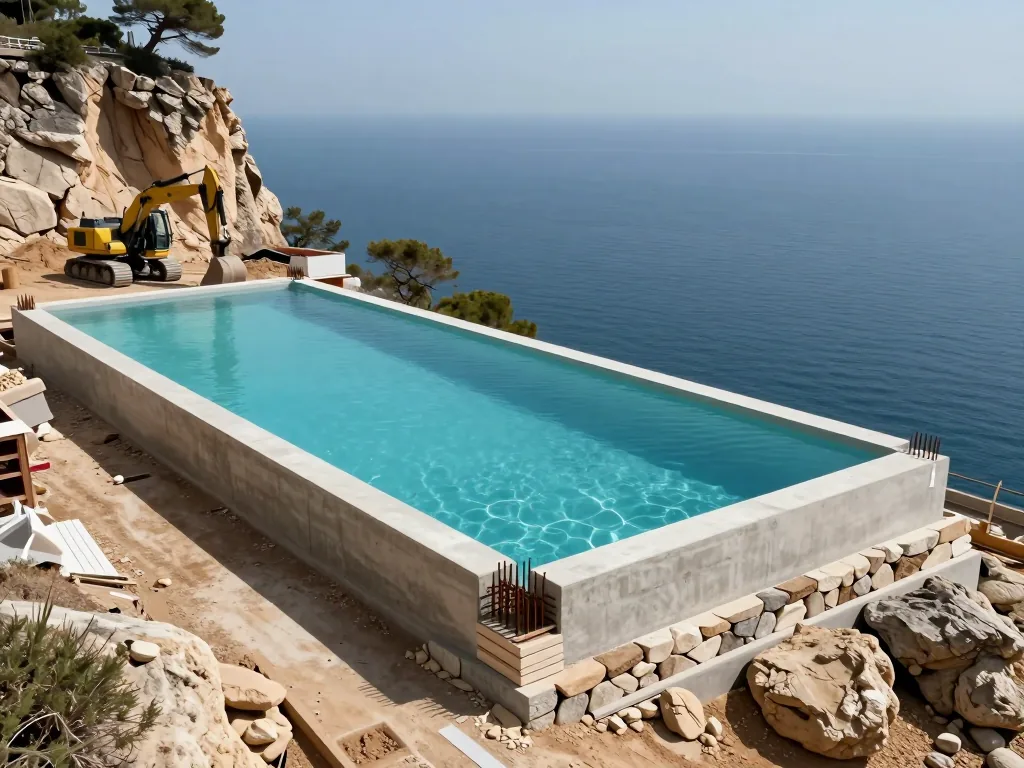
The Mediterranean sun warms your terrace; the sea glitters nearby. Your own pool, just steps away—that’s the dream. But on the Costa Brava, turning that vision into reality takes more than digging a hole and filling it with water. This guide walks property owners through every stage of installing a residential swimming pool: from initial planning and permits to construction choices and ongoing maintenance. It addresses the regulatory, environmental, and practical issues unique to the region’s coastal terrain and climate, helping you avoid costly delays and design mistakes. Whether you’re building for the first time or renovating an existing property, you’ll finish with a clear, actionable roadmap tailored to this distinctive stretch of Catalan coastline.
Understanding Local Regulations and Permits
Municipal Permits and Declarations
Before any excavator touches your soil, you must secure the appropriate approvals from your local ajuntament—the town hall that governs your specific municipality along the Costa Brava. The primary document you will need is a licencia de obras (building permit), obtained before excavation begins. For most pool installations, this permit is non-negotiable, as it legally authorizes construction on your property.
For smaller, less intrusive projects—such as a prefabricated above-ground pool or minor renovations—a declaración responsable may suffice. This simpler, faster declaration confirms your project complies with local regulations without requiring full plan approval. Still, don’t assume it applies to your situation; confirm directly with the town hall’s urban planning department first.
Your application requires a site plan showing property boundaries and existing structures, a detailed project description outlining the pool’s dimensions and features, and technical drawings from a qualified architect or technical architect (aparejador). These professionals understand local nuances and will ensure your plans meet all necessary standards.
Budget for permit fees, typically ranging from €500 to €2,000 per application depending on the municipality. Coastal towns like Cadaqués or Tossa de Mar may charge higher fees due to stricter oversight, while smaller inland villages might be more lenient.
Building Code and Urban Planning Compliance
The Spanish Technical Building Code (CTE) sets structural safety, hygiene, and accessibility standards, while local urban plans dictate setbacks, maximum built area, and pool coverage limits.
Your pool must respect specific distances from property boundaries—usually between 2 and 5 meters, though this varies by municipality and zone classification. Urban plans also cap the maximum pool surface area relative to your plot size, often limiting pools to 25–40% of the total land, depending on whether you are in a residential or rural zone.
Safety is paramount. Install a perimeter fence at least 1.2 meters high with a self-closing, self-latching gate to prevent unsupervised child access. This aligns with both the CTE and Catalan regional regulations, and inspectors will check it before granting final approval. Work closely with your architect to verify all setbacks and coverage limits early in the design phase, as correcting violations after construction is costly and time-consuming.
Site Assessment and Ground Preparation
Before a single shovel touches the earth, your Costa Brava pool’s success depends on understanding what lies beneath. The region’s dramatic coastline is stunning, but it brings unique geological challenges that can reshape both your timeline and budget. Skipping this phase is the most common reason projects spiral over budget.
Geotechnical Study and Soil Conditions
The Costa Brava’s terrain varies wildly, and your plot’s composition dictates the entire excavation strategy. Rocky ground, common on coastal properties, often demands mechanical rock-breaking or even controlled blasting. This isn’t a minor line item—budget an extra €5,000 to €15,000 for rock removal alone, depending on volume and hardness.
Sandy or loose alluvial soil presents a different hurdle. Such ground can collapse during excavation, requiring stabilization like deep compaction or sheet piling, plus a heavier reinforced concrete foundation to prevent settling later.
A professional geotechnical survey isn’t optional—it’s essential. For a typical residential pool, this analysis, including test boreholes and soil bearing capacity checks, runs €800 to €2,500. That modest cost yields a clear blueprint of what’s below, letting your builder quote accurately and sparing you the shock of hitting bedrock mid-dig.
Excavation and Access Considerations
Getting heavy machinery to the site is often trickier than expected. The Costa Brava’s narrow village streets and steep, winding driveways can block a standard 20-ton excavator. You might then need compact machinery or, in extreme cases, manual labor with smaller dumpers—slower and pricier.
Plan for spoil disposal too. If your property can’t retain the excavated earth and rock for landscaping, it must be hauled away. Local authorized site fees can add up, so include them in your logistics from day one.
Above all, never dig before every underground utility—water lines, gas pipes, electrical cables—is located and marked. One misplaced strike risks accidents, disrupts neighbors’ service, and triggers hefty fines. Coordinate with your builder and utility companies well ahead to confirm the site is safe for excavation.
Choosing the Right Pool Type and Materials
Your choice of pool construction material shapes everything—cost, upkeep, durability, and how well the pool fits your Costa Brava property. The rocky coastline, sloping terrain, and salt-laden air put serious stress on any structure, so the material must handle both geological and climatic demands. Three main options dominate the market, each with its own trade-offs.
Reinforced Concrete (Gunite) Pools
On uneven or steep plots, reinforced concrete is the clear winner for customization. Gunite is sprayed onto a steel rebar frame, which means virtually any shape, depth, or feature is possible—think vanishing edges blending into the Mediterranean horizon or free-form natural lagoons. The material is exceptionally tough, resisting ground movement and the corrosive effects of saltwater chlorination systems. But that versatility costs you. Plan for an 8-to-12-week build, since the structure needs skilled application, a curing period of several weeks before tiling or plastering, and careful waterproofing. Budget realistically: €30,000 to €60,000 for a standard 8x4 meter pool, with costs climbing fast for complex engineering on difficult slopes.
Prefabricated Fiberglass Pools
When speed matters, a one-piece fiberglass shell is a compelling option. The pool arrives on site and is lowered into a pre-excavated hole, and you can be swimming in as little as 2 to 4 weeks. The non-porous gel-coat surface resists algae naturally, which cuts chemical use—a real plus during the hot Costa Brava summers. The upfront price is lower too, ranging from €20,000 to €40,000 installed. The downside? You’re stuck with the factory’s shapes. And the shell needs a perfectly prepared sand or gravel bed for support; on the region’s common granite or clay bedrock, you may need extra excavation and a concrete base, which eats into those savings.
Vinyl Liner Pools
For the tightest budget, vinyl liner pools offer the lowest entry point, typically €20,000 to €35,000 installed. They give you moderate shape flexibility via a custom-fitted liner over a steel or polymer wall structure. The catch is longevity: the liner itself wears out and needs replacing every 8 to 12 years. This system also requires a perfectly smooth, crack-free substructure, and it’s a poor fit for areas with high groundwater pressure, which can wrinkle or lift the liner—a critical issue for plots near the sea. Before committing to any of these options, it’s wise to ask about pool installation and permits to ensure your chosen material aligns with local regulations and site conditions.
Water Management, Filtration, and Environmental Considerations
Filtration and Recirculation Systems
Every pool along the Costa Brava must run as a closed-loop system, recirculating and filtering the same water rather than discharging it. That’s not just good practice—it’s legally required under regional water conservation laws. Sand filters are the go-to choice here, prized for low maintenance and solid performance against the fine dust and pollen blowing in from the hinterland. Cartridge filters, meanwhile, trap smaller particles and yield noticeably clearer water, but they need more frequent cleaning and replacement, driving up running costs.
Size your pump to your pool’s total volume. A standard rule of thumb: turn over the entire volume once every six to eight hours, running the pump daily through the swimming season. Variable-speed pumps are now the norm on the Costa Brava, and for good reason—they can slash energy use by up to 70% versus single-speed models, a real saving given local electricity tariffs. Whatever pump you pick, invest in a quality pool cover. It cuts evaporation dramatically, keeps out leaves and insects, and—crucial in summer—slows overnight heat loss, so you’ll top up less often.
Saltwater Chlorination and Drought Restrictions
Saltwater chlorination systems have won over many property owners here, and you’ll see why at your first swim: the water feels softer, and chemical use drops sharply. But they require planning. The salt cell produces chlorine via electrolysis, and saline conditions are tough on untreated metals and certain porous stone finishes. If you’re considering natural stone coping or a liner with metal fittings, verify compatibility before committing—otherwise, expect corrosion and staining within the first season.
Drought is a recurring reality on the Costa Brava, and authorities take water use seriously. Filling a new pool—or refilling after maintenance—may demand explicit authorisation from the local water authority or your ajuntament (town hall). Check the current water restriction level before scheduling the initial fill; during severe drought, permits can face delays or outright denial. A pragmatic alternative is a rainwater harvesting system: a modest underground tank feeding your pool’s top-up line can cover a surprising share of annual evaporation, reducing mains dependency. And when restrictions ease, keep a usage record—that diligence smooths future approvals.
Cost Breakdown, Timeline, and Final Steps
Total Budget and Hidden Costs
Before breaking ground, map out the full financial picture. A standard concrete or gunite pool on the Costa Brava typically lands between €20,000 and €60,000 for base construction alone—but that figure is rarely the final word. Excavation and geotechnical work, especially on the region’s sloping plots or rocky hillsides, can add €2,000 to €15,000, depending on soil conditions and machinery access. Decking, landscaping, and perimeter fencing form another significant line item, ranging from €5,000 to €20,000; natural stone or travertine pushes costs toward the upper end. Heating, LED lighting, and automation systems—including remote control and salt chlorination—will set you back €3,000 to €10,000. And don’t overlook permit fees and project management: expect €1,000 to €4,000 for town hall approvals, technical inspections, and coordination with local architects or engineers.
Hidden costs often catch owners off guard. Water delivery for the initial fill, temporary electricity for construction, and skip or waste-removal container rental can add several hundred euros. If your plot requires retaining walls or drainage rerouting, budget an extra 10% contingency. Always ask your contractor for a detailed itemized quote that explicitly lists what is NOT included—this single step prevents most budget surprises.
Installation Timeline and Handover
A typical residential pool project in the Costa Brava takes 6 to 14 weeks from permit approval to first fill, depending on pool type, weather, and site complexity.
Once construction wraps, the handover phase demands careful attention. Schedule the initial fill during a period of no water restrictions—summer months on the Catalan coast often bring usage limits, so plan ahead with your local water authority. After filling, test water chemistry and adjust pH and chlorine levels before anyone swims; a balanced start prevents plaster staining and equipment strain. If your municipality requires it, obtain a final inspection certificate from the town hall before using the pool. Keep all permits, warranties, and as-built documentation in a secure file—these papers become invaluable when you sell the property, as buyers and notaries will request proof of legal installation.
Installing a pool on a Costa Brava property is a rewarding investment, but success hinges on three pillars: securing permits before breaking ground, budgeting for the region’s rocky terrain and access constraints, and choosing a water-efficient system that complies with local scarcity regulations. Prioritize these from day one to avoid costly delays and ensure your pool enhances both your home and the surrounding landscape. Next, contact the local town hall (ajuntament) to request a pre-application consultation, then commission a site survey from a licensed installer specializing in Costa Brava geology. With these foundations in place, you can move confidently from planning to construction—and soon enjoy a Mediterranean retreat that works with, not against, its environment.
Frequently asked questions
Do I need a building permit to install a swimming pool on my Costa Brava property?
What are the typical soil and excavation challenges on the Costa Brava coast?
How close to the sea can I install a pool, and are there coastal setback rules?
What pool type is best suited for the Costa Brava's climate and terrain?
How long does a typical pool installation take on the Costa Brava?
What is the average cost range for installing a pool in the Costa Brava?
Are there any water usage restrictions for filling or refilling a pool in the Costa Brava?
What is the best way to handle pool drainage and wastewater on a coastal property?
Do I need to consider any special electrical or safety regulations for a pool in the Costa Brava?
How can I choose a reliable pool installer in the Costa Brava region?
Tell us about your renovation
Send photos or plans on WhatsApp and get a detailed quote — usually within 48 hours. Free, no obligation.
We usually reply within a few hours