
Costa Brava Renovation Costs in 2026: The Real Price to Rebuild Your Spanish Dream Home
Discover 2026 Costa Brava renovation costs: full home rebuild prices, per-m² rates, permits & hidden fees for your Spanish dream home.
27 September 2026
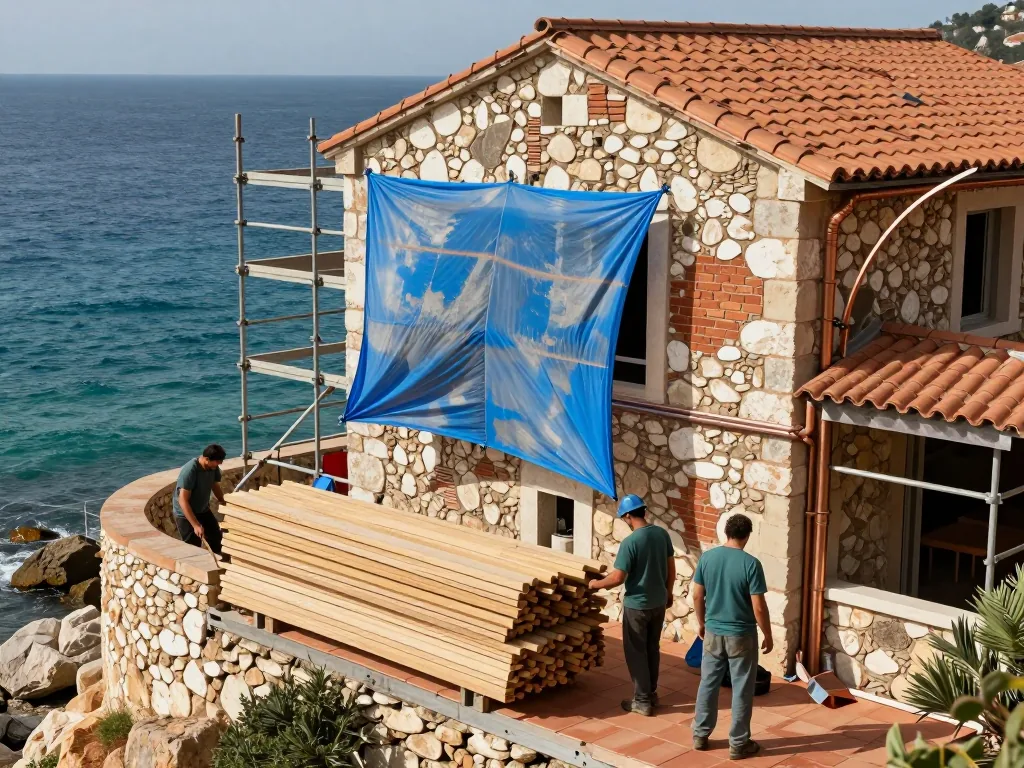
The dream of owning a sun-drenched property on the Costa Brava often collides with the gritty reality behind its weathered façade. As we move through 2026, the cost of stripping a Catalan home back to its bones has shifted dramatically, driven by new energy regulations, soaring material prices, and a chronic shortage of skilled local labor. Whether you’ve just signed the deeds on a crumbling masia or are planning a full gut of a 1970s apartment, this guide delivers the definitive, current-day price breakdown for a complete renovation—from permits and structural work to finishes and hidden fees. You’ll leave with a realistic budget range, the specific cost drivers unique to this coastline, and the critical questions to ask contractors before you commit a single euro.
Understanding the True Cost Per Square Meter in 2026
If you’ve looked into renovation costs along the Spanish Mediterranean, you’ve seen the headline figure: €1,200 to €2,500 per square meter. That range is a useful compass, but it’s not a contract. The number you pay in 2026 swings dramatically on three variables: the property’s current state, its exact spot within the Costa Brava’s microclimates, and the finish level you demand. A stone farmhouse in the hills above Begur, with original beams and a collapsed roof, sits at the low end. A 1980s apartment in a coastal complex in Lloret de Mar—needing full gutting and modernized systems—pushes toward the top, or beyond, if you choose imported stone and designer fittings.
What the Base Estimate Includes and Excludes
The €1,200 to €2,500 per square meter figure typically covers the essentials: demolition of existing interiors, structural repairs to load-bearing walls or roof framing, complete replacement of plumbing and electrical systems, and standard finishes—ceramic tiles, painted walls, basic but functional kitchens and bathrooms, plus all labor. What it doesn’t include is where many budgets quietly die. Land value is never part of the calculation. Neither are architect fees (running 5% to 10% of the works), project management, municipal permits, furniture, appliances, landscaping, or the critical contingency buffer of 10% to 15% that every experienced renovator will insist you hold. And if your home sits within 500 meters of the sea, the base quote almost certainly excludes specialist coastal treatments: anti-humidity membranes, salt-resistant plaster and coatings, and corrosion-proof fixtures. Unless your contractor has explicitly itemized these, assume they’re absent.
Why Coastal Labor Rates Are Higher Than Inland Spain
The Costa Brava’s relentless tourism economy, plus an influx of expat buyers with renovation budgets, has created a labor market that behaves very differently from Girona’s interior. Skilled tradespeople—electricians, plumbers, tilers—are constantly pulled toward the coast by higher-paying projects, pushing their hourly rates up 20% to 30% compared to similar work in inland towns like Banyoles or Santa Coloma de Farners. Timing matters just as much as location. Between May and September, when villa renovations compete with hotel maintenance and new bar terraces, quotes inflate noticeably. Schedule your project for autumn or winter, and you can realistically shave 5% to 10% off labor costs, as tradespeople are hungrier for work and negotiation becomes possible. For a 150-square-meter home, that difference alone could mean keeping €3,000 to €6,000 in your pocket.
The Legal and Permit Framework You Cannot Skip
Before a single wall comes down or a new window goes in, your Costa Brava renovation will land on the municipal planning department’s desk. This isn’t a bureaucratic hurdle you can quietly bypass—it’s the bedrock of your entire budget. Structural changes, facade alterations, even removing certain interior partition walls, all demand a municipal construction license, known locally as a licencia de obras. Skip it, and you face immediate work stoppages, hefty fines, or, in the worst cases, an order to demolish the unauthorised work at your own cost.
Permit Fees and Calculation by Municipality
License costs aren’t fixed nationally; they shift with each town hall. Municipalities like Girona, Figueres, and Blanes charge a percentage of your declared works budget, typically between 1% and 4%. On a substantial €200,000 renovation, that’s a permit fee of €2,000 to €8,000. Always declare the full, realistic budget. Under-declaring to trim the license fee is a false economy—it risks fines and stoppages if an inspector shows up to compare the project’s scale with your figures. Budget for this from the start, and set aside a separate contingency for the mandatory técnico (architect or technical architect) who must sign off the plans. Their fees for a full renovation usually run from €3,000 to €12,000, depending on complexity.
Coastal Protection Laws and Special Permits
If your property sits within 100 meters of the shoreline, the Ley de Costas (Coastal Law) adds another layer of scrutiny. This national legislation shields the public maritime-terrestrial domain and strictly limits exterior changes. Replacing windows, adding a terrace, or altering the roof line in this zone isn’t automatically approved. You’ll need separate authorization from the regional coastal authority, which operates independently of your local town hall. The process is slower and more demanding, requiring extra technical reports. Realistically, factor in 2 to 4 months of additional lead time for this approval alone. In some protected zones, the authority may outright reject certain exterior modifications, forcing a redesign. Hiring a local architect with proven coastal experience isn’t optional here—it’s the difference between a delayed project and a dead one. This legal layer can tack on €1,500 to €5,000 in extra professional fees and administrative charges to your total budget.
VAT and Tax Implications for Your Renovation Budget
Spanish VAT (IVA) isn’t a flat, unavoidable 21% hit on every euro you spend—but you must structure your project correctly to benefit from the reduced rate. The standard 21% applies to most building materials (tiles, paint, sanitaryware, fixtures), furniture, appliances, and any services not strictly part of the building’s rehabilitation. In practice, your kitchen units, sofas, and decorative lighting will always be taxed at the full rate. The 10% reduced rate, however, is a significant saving that can slash thousands off your total budget. This lower rate applies to labor and integrated materials for “housing rehabilitation” if the work meets one of two conditions: the total renovation cost exceeds 25% of the property’s value (excluding land value), or the building is over 30 years old. Many older Costa Brava fincas and apartment blocks qualify on the age criterion alone. To claim the 10% rate, you must hire a registered contractor—not pay cash to unregistered tradespeople—keep itemized invoices that separate labor from materials, and ensure the contract explicitly states the work constitutes rehabilitation. Have a Spanish tax advisor review your project scope before you sign anything; a poorly worded contract can result in the tax office demanding the full 21% retroactively.
For non-resident owners, VAT reclaim rules are stricter. You cannot reclaim the VAT on renovation costs simply because you own the property. The only exception is if you’re renting it as a business activity (e.g., short-term holiday lets registered with the Catalan government). In that case, you can register for Spanish VAT and potentially reclaim input VAT on renovation invoices—but this adds quarterly filing obligations, a local fiscal representative in many cases, and administrative complexity that may not be worth it for a single project. If you plan to rent, factor in the cost of a gestor to handle VAT filings, typically €150 to €300 per quarter. If you don’t rent, accept that VAT is non-recoverable and build the 10% or 21% into your contingency fund from day one.
Material Costs and Supply Chain Realities in 2026
Renovating on the Costa Brava in 2026? The biggest shock won’t be labor—it’s materials, and how long they take to arrive. Mediterranean-specific products are beautiful, but they come with a double penalty: premium pricing and extended lead times that can stall your project for weeks.
Traditional Terracotta Tiles, Lime Plaster, and Local Stone
That authentic look—hand-pressed barro cocido floors, breathable lime plaster, rough-hewn local stone—costs real money. Genuine terracotta and lime-based plasters run 15–30% more than standard ceramic tiles and gypsum. On a 120m² ground floor, that premium means roughly €3,000–€6,000 extra just for flooring. Lead times are the hidden killer: terracotta producers in Valencia and Andalusia are booked 6–10 weeks out, and lime plaster from specialist suppliers in Girona or Barcelona often takes 8 weeks. Order these before you sign the contractor contract, or you’ll be paying rent while your shell sits empty.
Local stone—say, Girona granite for countertops or cladding—is a smarter bet. It’s typically 10–20% above generic porcelain or concrete, not the 40–50% markup of imported Carrara or Indian marble. A granite kitchen island runs €800–€1,200 per linear meter installed, versus €1,400–€1,800 for comparable marble. Even so, quarry backlogs in 2026 mean a 3–5 week lead time.
Expect 15-30% higher costs for authentic terracotta (barro cocido) and lime-based plasters compared to standard ceramic and gypsum. Lead times are 6-10 weeks, so order early. Local stone (e.g., Girona granite) is cheaper than imported marble but still 10-20% above generic alternatives.
Standard Materials as a Cost-Saving Alternative
Compromise on authenticity, and the savings add up. Porcelain tiles that convincingly mimic terracotta—irregular edges and color variation included—cost €35–€55 per m², versus €70–€95 per m² for the real thing. Standard cement plaster from a local paleta runs €18–€25 per m²; lime plaster sets you back €32–€45 per m². Prefabricated concrete lintels, beams, or entire wall sections cut structural material costs by 20–30% compared to poured-in-place or stone-built methods.
The trade-off is real. Porcelain and cement plaster look clean and coastal, but they lack the tactile warmth and micro-cracks that give a 200-year-old masia its soul. In markets like Begur or Cadaqués, where buyers seek traditional Catalan character, a generic finish can shave 5–10% off resale value. Flipping? The math often favors authenticity. Building for yourself and skipping period charm? The standard route saves €8,000–€15,000 on a full home renovation—but order those porcelain tiles early, because even they carry a 4–6 week lead time.
Energy Efficiency and the 2026 Building Code (CTE)
Planning a full renovation on the Costa Brava in 2026? The single biggest cost driver you cannot negotiate away is compliance with the updated Spanish Building Technical Code (Código Técnico de la Edificación, or CTE). This isn’t a green-optional add-on; it’s the legal baseline for any major structural work. Expect it to add roughly 10% to 20% to your total budget compared to pre-2020 standards. On a typical €200,000 full rebuild, that’s a surcharge of €20,000 to €40,000—before you pick out a single tile.
Mandatory Upgrades You Cannot Avoid
Skip these four systems, and your project will fail final inspection. For a 150 m² home, the non-negotiable list includes:
- Exterior wall insulation: You must hit minimum thermal transmittance (U-value) limits. In practice, that means adding 8–12 cm of rigid insulation (XPS or mineral wool) to all facades. On a typical villa, materials and labour alone run from €4,000 to €8,000.
- High-efficiency heating and cooling: Air-source heat pumps are now the default. Budget from €6,000 to €12,000 for a complete ducted or split system sized for 150 m²—plus underfloor heating pipes if you opt for them.
- Solar thermal or photovoltaic panels: Major renovations require solar installation. Whether you need PV (electricity) or solar thermal (hot water) hinges on roof orientation and size. A realistic 3–5 kW PV array with battery-ready inverter costs €5,000 to €9,000 installed.
- Mechanical ventilation with heat recovery (MVHR): New insulation makes homes airtight, so balanced ventilation is legally required. A quality MVHR unit with ducting for 150 m² runs from €3,500 to €6,500.
How to Budget for the Energy Surcharge
For a 150 m² home, the combined energy-compliance premium lands between €15,000 and €30,000 extra. It’s not optional—your final occupancy certificate will fail without it. But the long-term math favours you. These upgrades typically cut annual utility bills by 40% to 60%, so a €2,500/year energy spend drops to roughly €1,100. Over ten years, that’s €14,000 saved. Additionally, several Costa Brava municipalities—including Girona and Palafrugell—offer property tax (IBI) rebates of up to 50% for three years on certified energy-efficient renovations. Factor that into your cash-flow plan, but don’t rely on it to cover upfront capital. In short: build the full energy surcharge into your loan now, or you’ll be re-mortgaging halfway through the build.
Coastal-Specific Costs: Humidity, Salt, and Weatherproofing
The Mediterranean climate is deceptively beautiful—sun-drenched summers give way to damp, windy winters, and the salt-laden air never truly rests. On the Costa Brava, your renovation budget must therefore account for a battle against moisture and corrosion that inland projects simply never face. Ignoring these costs is the fastest way to watch your investment crumble, quite literally, within a few seasons. A standard inland quote won’t save you here; you need a coastal-specific line item.
Before you pick a single tile, your walls and floors need a defensive layer. For any property within roughly one kilometer of the sea, capillary rise—where groundwater pulls salt up through masonry—is a constant threat. You’ll need waterproof membranes, salt-resistant render, and anti-capillary injections for the walls. Realistic 2026 pricing for this essential work ranges from €20 to €50 per square meter, depending on wall thickness and the number of treatments required. If your home has a basement or a low-lying ground floor, a proper perimeter drainage system with a sump pump is non-negotiable, adding anywhere from €5,000 to €15,000 to your total. This isn’t an optional upgrade; it’s the difference between a dry home and a mold-riddled one within two years. To see how these figures apply to your specific layout, you can request a personalized cost estimate before committing to any contractor.
Your choice of exterior fixtures will make or break your long-term budget. Standard galvanized steel and untreated pine are a false economy—they’ll rust or rot within three to five years, forcing a costly replacement that doubles your initial outlay. For 2026, budget for aluminum or marine-grade stainless steel for all railings, window frames, and external fixtures. For decks and pergolas, invest in treated hardwoods like iroko or teak, which naturally resist rot and insect damage. Marine-grade paints and specialized sealants for exterior wood and masonry add another layer of protection, typically costing 15-20% more than standard paints. Allocate €2,500 to €7,000 for these upgraded materials alone, depending on your home’s footprint. It sounds steep, but this is the price of peace of mind on the coast—and it’s far cheaper than the alternative.
Timeline and Project Management: Avoiding the 12-Month Trap
A full home renovation on the Costa Brava typically spans six to twelve months, but coastal realities often stretch that timeline toward the upper limit—and beyond. Most owners make the mistake of treating it like an inland urban renovation, where trades are abundant year-round and municipal permits move at predictable speed. On the coast, you’re competing with a seasonal economy, and grasping that rhythm is the difference between a smooth rebuild and a 14-month saga.
Seasonal Labor Shortages and Inspection Bottlenecks
- Summer (June–August): This is peak season for tourist property maintenance. Electricians, plumbers, and tilers are booked solid fixing rental villas and pool pumps, not renovating empty homes. Expect 2–4 week delays on any trade you call, plus rates often 15–20% higher than in winter. If possible, keep critical path work off this period.
- Municipal inspectors: Every town on the Costa Brava—from Blanes to Cadaqués—has a limited number of inspection slots each week. For your final certificate of occupancy, book 4–6 weeks ahead. Miss your slot, and you’ll wait another cycle, which can stall your mortgage drawdown or rental license.
- Winter (November–February): This is your strategic window for structural work. Demolition, concrete, and steel framing proceed without tourist congestion, and contractors are more available and negotiable. The caveat: outdoor work—roofing, exterior rendering, pool construction—may pause for days during rain, so build weather buffers into your schedule.
How to Structure Your Renovation Phases
Phase 1: Permits and design (2–3 months). This covers architect drawings, structural calculations, and municipal approval. On the Costa Brava, coastal setback and heritage rules can add time, so start early.
Phase 2: Demolition and structural (2–3 months). Interior gutting, wall removal, roof replacement. If your property has stone walls, budget contingency for hidden reinforcement.
Phase 3: MEP—mechanical, electrical, plumbing (2–3 months). This is where underfloor heating, new wiring, and water systems go in. Budget from €15,000 to €30,000 for a typical 120–150 m² villa.
Phase 4: Finishes and interiors (2–4 months). Tiling, plastering, carpentry, painting, kitchen and bathroom installation. This phase stretches longest if you’re importing materials or waiting on custom joinery.
Add a mandatory 1-month buffer for unforeseen issues—foundation surprises, delayed shipments, or a subcontractor who goes silent in August. That buffer is what keeps you out of the 12-month trap.
Budgeting Strategies and Hidden Costs to Prepare For
Even the most detailed, line-item quote from a reputable Costa Brava contractor cannot predict what lies behind your walls, beneath your floors, or under your plot of hillside land. The region’s older homes—many built in the 1960s and 70s with local stone and lime mortar—are notorious for concealing decades of improvised repairs. A quote is a professional estimate, not a guarantee. Your financial protection comes from how you structure your budget from day one, not from hoping the demolition phase goes smoothly.
The 15% Contingency Rule and What It Covers
Always set aside 15% of the total budget for hidden issues: rotten beams, outdated wiring, unexpected rock during excavation, or permit delays that push labor into peak season. Without this buffer, a €150,000 renovation can easily become €180,000.
This contingency is not for upgrades or aesthetic whims—it is strictly for survival. In practice, it covers the discovery of termite-damaged roof trusses (replacement runs from €4,500 to €9,000 per section), the need to re-run electrical panels to meet 2026 Spanish code (€3,000 to €6,500 for a typical 120m² home), or the moment your excavator hits a granite shelf that requires hydraulic breaking (€80 to €150 per hour, often adding two to three days). Permit delays are equally common; if your obra license stalls for three months and your contractor shifts your project into June, labor rates jump by 10–15% due to seasonal demand. The 15% rule absorbs this without forcing you to pause mid-project.
Where to Save Without Regret
- Keep the original layout to avoid structural engineering fees, which typically run from €1,500 to €3,500 for a full report and calcs. Moving a load-bearing wall adds €4,000 to €8,000 alone.
- Use standard-size windows and doors instead of custom. A standard aluminum double-glazed window costs from €350 to €600 per unit installed; a custom arched or oversized unit starts at €900 and climbs quickly.
- Do your own demolition of non-structural elements (tiles, cabinets) if you’re physically able—saves €2,000 to €5,000. Rent a skip bin (€250 to €400 per week) and buy a decent sledgehammer.
- Buy fixtures and tiles from local builders’ merchants rather than tourist-oriented showrooms in Palamós or Cadaqués. The same porcelain tile can be €28 per m² at a merchant and €48 per m² at a boutique.
Where Not to Save
Never compromise on waterproofing, electrical rewiring, or structural reinforcement. These are invisible but critical for safety and resale value. A cheap membrane on a sea-facing terrace will fail within three winters, leading to interior damp that costs €10,000+ to remediate. Likewise, reusing 1970s wiring to save €2,000 risks fire and voids your insurance. In 2026, buyers in the Costa Brava are sophisticated—they check for these three elements before making an offer. Spending correctly here is not an expense; it is the difference between a dream home and a liability.
Working with Professionals: Architects, Contractors, and Project Managers
Most overseas buyers on the Costa Brava make one costly mistake: trying to save money by skipping the professional team. The truth is, the right architect and project manager will save you far more than they charge—through avoided rework, faster permits, and catching structural surprises before walls come down. A well-coordinated team also keeps your renovation on schedule, which matters when you’re paying for temporary housing or losing rental income.
When You Need an Architect vs. a Technical Architect
The Spanish distinction between these two roles matters. A full architect (arquitecto) is legally required for structural changes, new builds, and major alterations—anything touching load-bearing walls, roofs, or the building’s footprint. Their fees typically run 5% to 10% of total works cost, which for a full Costa Brava renovation (€150,000–€400,000) means €7,500 to €40,000. A technical architect (aparejador), however, suffices for cosmetic renovations—new kitchens, bathrooms, flooring, interior finishes—and also handles permits and on-site supervision. Their fees are more modest: 2% to 4% of works. For any full renovation involving structural work, you’ll almost certainly need both: the arquitecto to design and sign off on structural changes, the aparejador to oversee daily site progress and ensure the build matches plans. Budget for both from day one. Never let a contractor suggest skipping the architect for “minor” wall removals—local councils are strict, and unapproved structural work can make your property unsellable.
How to Vet Contractors on the Costa Brava
Reliable contractors here aren’t found through glossy websites; they’re found through verifiable track records. Ask for three references from similar coastal projects, ideally within 20 kilometres of your property, since salt-air and humidity create specific material and finish challenges. Verify their professional liability insurance is current and covers your project’s full value. Then request a fixed-price contract with a detailed line-item breakdown of materials, labour, and contingency. Avoid any contractor demanding more than 20% upfront—anything above signals cash-flow problems or worse. Finally, confirm they’re registered with the local colegio (professional association). Check online or call the provincial office in Girona; it takes ten minutes and shields you from unlicensed operators who might leave you with no legal recourse. A vetted team costs a bit more in fees, but it’s the difference between a dream home and a financial nightmare.
Financing and Payment Schedules for a Smooth Cash Flow
A full renovation on the Costa Brava is rarely a single, lump-sum transaction. Whether you are rebuilding a stone masia in the Baix Empordà or modernising a seaside apartment in Lloret de Mar, the total cost will typically range from €1,800 to €3,200 per square metre for a complete, turnkey overhaul in 2026. Structuring how you release those funds is not just a matter of convenience—it is your primary defence against cost overruns, abandoned projects, and substandard workmanship. The golden rule is simple: never pay for work that has not been completed, inspected, and approved by you or an independent architect.
Typical Payment Milestones
A professional contractor on the Costa Brava will expect a structured payment schedule tied to verifiable progress, not arbitrary dates. While every contract differs, a robust, industry-standard breakdown for a full renovation in 2026 follows this pattern:
10–20% upon signing the contract: This initial deposit secures the contractor’s calendar, covers the cost of scaffolding, skip hire, and purchasing long-lead materials like custom aluminium windows or structural steel. Be wary of anyone demanding more than 20% upfront; this is a red flag for cash-flow problems on their side. Ensure this deposit is paid via bank transfer, not cash, and is explicitly tied to a detailed scope of works.
30–40% after the structural phase is complete: This milestone is reached when demolition, new wall openings, roof repairs, and any structural reinforcement (common in older stone properties) are finished and signed off by a structural engineer. You should receive a written report and photographic evidence before releasing these funds.
30–40% after first fix and wet trades: Once the electrical conduits, plumbing rough-ins, underfloor heating pipes, and plastering are complete, you will pay the next tranche. This is also the moment to verify that all materials delivered match the agreed specification—check for the correct brand of insulation and tile thickness before you hand over the money.
Final 10–15% upon completion and handover: The last payment is your leverage. It should only be released after the final inspection, when the certificado final de obra is issued, all snagging items are fixed, and you have the keys in your hand. Never pay the final amount before the property is legally habitable and your architect has confirmed completion. Holding back this percentage protects you for up to six months, allowing you to claim against the contractor for any latent defects that appear after you move in.
Frequently asked questions
What is the average total cost of a full home renovation in Costa Brava in 2026?
Why do renovation costs vary so much between homes in Costa Brava?
Are there typical cost breakdowns for labor, materials, and permits in 2026?
How much does a permit and architect cost for a full renovation in Costa Brava?
Does a full renovation in Costa Brava include updating plumbing, electrical, and HVAC systems?
What are the extra costs for renovating a property with sea views or in a coastal cliff area?
How much should I budget for kitchen and bathroom renovations as part of the full project?
Are there any hidden costs like waste disposal or temporary housing during the renovation?
How can I reduce the cost of a full renovation in Costa Brava without compromising quality?
What is the realistic timeline and how does it affect the budget in 2026?
Tell us about your renovation
Send photos or plans on WhatsApp and get a detailed quote — usually within 48 hours. Free, no obligation.
We usually reply within a few hours