
Mediterranean Kitchen Renovation Ideas for 2026 That Feel Like a Sun-Drenched Escape
Transform your home with 2026 Mediterranean kitchen renovation ideas—sun-drenched palettes, rustic textures, and coastal charm for a timeless escape.
10 October 2026
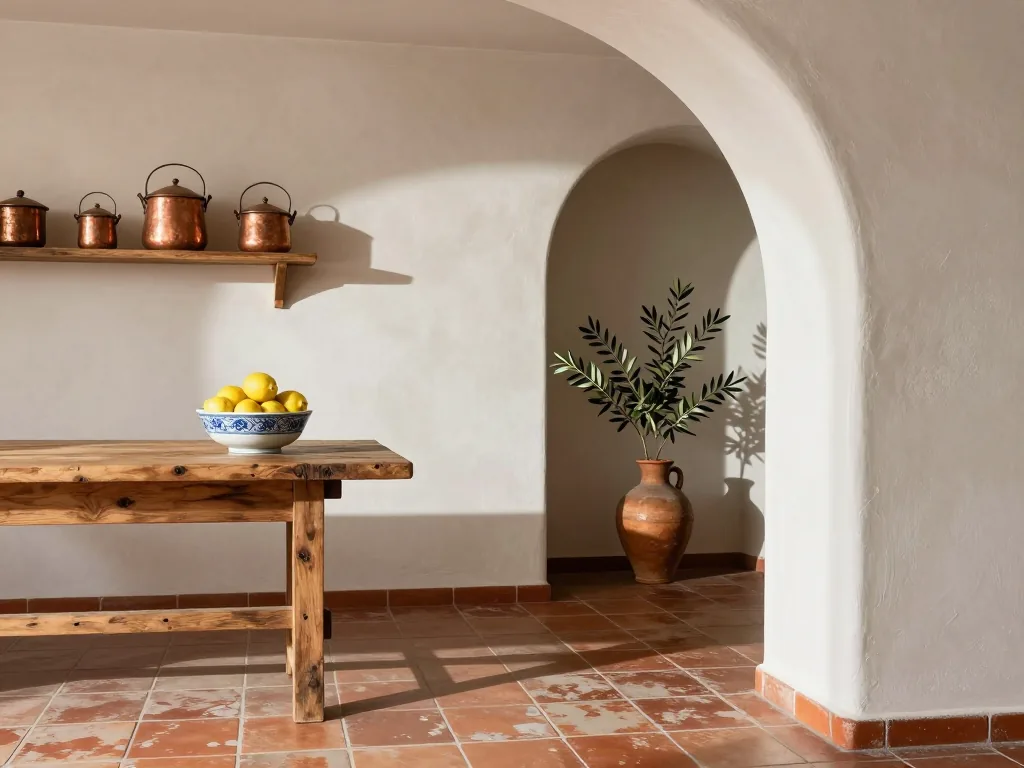
Step outside the gray of everyday life and into a kitchen that hums with the warmth of a Santorini morning. By 2026, Mediterranean style has moved well beyond the familiar white-and-blue clichés. It now unfolds as a rich tapestry of sun-washed textures, earthy clay tones, and breezy, effortless living.
Consider this guide your passport to turning the heart of your home into a coastal sanctuary. You’ll find curated ideas—hand-painted tiles, arched niches, limewashed walls, natural oak—each designed to capture that perpetual, golden-hour glow.
Whether you’re tackling a full gut renovation or just want a refreshing weekend refresh, you’ll walk away with a clear, actionable blueprint. The goal? A space that feels like a permanent summer escape.
Before you source a single tile or order a plaster sample, commit to a regional dialect of Mediterranean design. For 2026, the three most compelling anchors are Spanish Andalusian, Greek Cycladic, and Italian Tuscan—and they are not interchangeable. Andalusian style is a sensory overload of glazed, hand-painted azulejos, intricate wrought-iron fixtures, and cool courtyard fountains; it thrives on pattern and shadow play. Greek Cycladic is the opposite: a monastic reliance on whitewashed walls, deep navy or cobalt blue accents, and unadorned, sculptural forms that bounce light around the room. Tuscan, meanwhile, grounds you in the earth—rough-hewn chestnut ceiling beams, warm travertine or pietra serena stone, and a palette drawn from olive groves and sun-baked clay. The mistake most renovators make is blending these: a Tuscan beam over a Cycladic white wall with Andalusian tiles creates a visual argument, not a harmony. Pick one as your non-negotiable anchor, and let every subsequent choice—from cabinet hardware to backsplash—answer to that logic.
Once your anchor is set, lock in the 2026 color and texture palette. The current trend reports from Milan and Paris are unanimous: the sun-drenched Mediterranean look is no longer about glossy, high-contrast finishes. It is matte, breathable, and tactile. Build your base from warm whites (think ivory, bone, and chalk), ochre, terracotta, and a deep, inky blue—but specify them in textured surfaces only. Skip polished porcelain and lacquered cabinetry. Instead, insist on lime plaster for walls (which naturally regulates humidity and develops a soft, mottled patina), raw limestone for countertops or splashes, and hand-troweled microcement for floors or a seamless wet-room shower. These materials reflect light diffusely rather than blindingly, mimicking the effect of sun on ancient surfaces. For a 2026 budget, expect to pay from €60 to €120 per square meter for applied lime plaster, and from €90 to €180 per square meter for hand-troweled microcement, depending on your region and labor costs. The result is a kitchen that feels less like a showroom and more like a villa wall that has warmed in the sun for decades—exactly the escape you are after.
Before you fall for that particular shade of terracotta or a hand-painted tile pattern, you must first secure the bones of your project. A Mediterranean kitchen renovation in the EU in 2026 is as much about physics as aesthetics. The revised Energy Performance of Buildings Directive now requires that any major renovation—including a full kitchen overhaul—brings the space to Nearly Zero-Energy Building (NZEB) standards. This isn’t a suggestion; it’s a compliance threshold. For your kitchen, that means stripping back to the studs and upgrading the building envelope. Replace old single-glazed windows with triple-glazed units or high-performance double-glazed glass that still allows for slim, dark bronze or anthracite frames—profiles that echo traditional wrought iron without the thermal bridging. Insulation behind new plaster is non-negotiable; use rigid PIR boards or natural cork-lime render to keep summer heat out and winter warmth in, all while preserving that breathable, sun-baked wall texture. Every appliance must be A+++ rated, from the induction hob to the integrated fridge-freezer. Budget realistically: high-performance glazing runs from €800 to €1,400 per square meter installed, and full wall insulation with plasterwork typically costs from €90 to €160 per square meter, depending on your wall condition.
Next, think about airflow and light—the true soul of a cool Mediterranean kitchen. A sealed, boxy room feels like a cave, not a coastal retreat. Genuine cross-ventilation likely demands a pass-through window to an exterior terrace or a new set of patio doors opening onto a shaded loggia. These aren’t cosmetic tweaks; they involve removing load-bearing wall sections or enlarging existing openings, which triggers local building permits and structural engineering sign-off. You cannot demolish before approval, and in many municipalities, this process takes four to eight weeks. Factor in engineering fees (from €500 to €1,200 for a single opening assessment) and permit costs (from €150 to €400, depending on your locality). For the patio door itself, a high-performance aluminum sliding system with thermal break and integrated roller blinds will cost from €2,500 to €4,500 installed, while a pass-through window with a solid oak sill and folding glass panels ranges from €1,800 to €3,200. These structural moves are an investment, but they deliver the dual benefit of passive cooling and that seamless indoor-outdoor rhythm that defines a truly sun-drenched escape.
Sourcing Authentic Materials and Managing Lead Times
The soul of a Mediterranean kitchen lies in its materials—sun-baked clay, cool stone, and glazed ceramics that catch the light like the sea. But sourcing these authentically in 2026 requires patience and strategy, especially as global demand for artisanal goods continues to rise.
Natural Stone and Terracotta Flooring
Limestone, travertine, and terracotta remain the quintessential choices for floors and countertops. Each has distinct characteristics that demand respect. Terracotta tiles, fired from natural clay, offer that warm, rustic glow, yet they are softer than stone and highly porous. You must seal them thoroughly—and plan to reseal annually—to protect against stains and moisture. Limestone, by contrast, stays beautifully cool underfoot, a genuine blessing in warmer climates, but it scratches more easily and requires a matte, non-slip finish to be practical in a kitchen. Travertine, with its natural pits and veining, sits somewhere between the two. Before committing, ask your supplier for the tile’s exact porosity rating and absorption rate. A high-quality penetrating sealer is non-negotiable, and you should budget for it as a separate line item. For a 50-square-meter floor, expect to pay from €1,800 to €4,500 for the stone itself, with professional sealing adding another €600 to €1,200.
Hand-Painted Ceramic Tiles and Open Shelving
This is where your kitchen truly becomes a destination. Azulejos and majolica tiles from Portugal, Spain, or Morocco are not off-the-shelf products; they are custom-order items, often painted by hand in small workshops. Lead times are substantial—typically 8 to 12 weeks from order to delivery, and longer if you request a bespoke pattern or colorway. The moment your renovation budget is approved, place this order. Do not wait. While you wait, design your open shelving in solid oak or reclaimed pine, which provides a warm, organic counterpoint to the glossy ceramics. A critical technical note: if you plan to use lime-based paints on your walls—a staple of the Mediterranean palette—do not use standard acrylic primers underneath. They create a film that prevents the lime paint from breathing and bonding correctly. Use a mineral primer, which is compatible with the alkaline nature of lime and ensures a durable, breathable finish that will not peel or blister.
Designing the Island and Work Triangle for 2026
The shallow, purely functional island is a thing of the past. In 2026, the Mediterranean kitchen embraces a deeper, more generous silhouette: the 90 cm deep island. This isn’t a styling whim—it’s a functional shift. That extra depth lets the island double as a serious prep surface and a casual dining spot, no separate breakfast bar required. You can line up bar stools on one side while keeping the opposite edge free for chopping, rolling, and plating. But this added depth demands respect for your room’s proportions. Measure your kitchen’s width before committing. You’ll need at least 110 cm of clear walkway around all sides to keep traffic flowing—especially with the oven door open or a child pulling out a stool. If your space is narrower than roughly 3.5 meters across, go with a 75 cm depth instead, or shift to a single-sided galley configuration.
The work triangle in 2026’s Mediterranean kitchen is less about rigid geometry, more about logical flow zones. Position the sink, stove, and refrigerator in a loose triangle, but place a dedicated prep zone—a butcher-block insert or marble slab—directly beside the pass-through window that opens to your terrace or garden. That’s where you’ll chop herbs, squeeze lemons, and plate meze while chatting with guests outdoors. The dishwasher should sit immediately to the right or left of the sink, never across the room, to cut down on dripping cross-traffic. For the coffee ritual, carve out a recessed niche in the wall—perhaps in the backsplash or a shallow pantry—to house a built-in espresso machine and grinder. This keeps counters visually clean, which matters more than ever when open shelving puts every appliance on display. Skip the bulky toaster; opt for a compact, integrated model that tucks under the upper cabinets. The goal isn’t minimalism for its own sake. It’s a calm, sunlit workspace where every tool has a home, and the island remains the generous, welcoming heart of the room.
Wall Finishes and Humidity Control
Limewash and Lime Plaster Application
The most transformative wall treatment for a Mediterranean kitchen in 2026 is lime—and it’s genuinely practical, too. Unlike modern acrylic paints, which trap moisture behind an impermeable film, lime-based paints and plasters breathe. They absorb ambient humidity from cooking steam and release it slowly, naturally regulating the room’s microclimate while resisting the mold and mildew that plague coastal or damp climates. For authentic results, apply two to three coats of limewash or lime plaster using a wide brush or a steel trowel, working in thin, irregular layers. The key rule: never use a standard acrylic primer underneath. Lime needs to bond with a mineral substrate—either bare plaster or a lime-specific primer—otherwise it will peel within months. The finish dries to a chalky, mottled texture with subtle tonal shifts, from soft ochre to warm limestone. These are not imperfections; they’re the entire point of the aesthetic. For a full wall, expect to pay from €18 to €35 per square meter for materials and labor, depending on the complexity of the trowel work and the region.
Backsplash Alternatives to Full Tile
Full-tile backsplashes are expensive and visually heavy for a 2026 Mediterranean renovation. Instead, reserve tile for a single, dramatic band—around 30 to 40 centimeters high—directly behind the stove. Use hand-painted ceramic tiles in azulejo or geometric patterns; this narrow strip becomes the kitchen’s focal point without overwhelming the space. Everywhere else, finish the walls with lime plaster, which provides a seamless, sun-washed backdrop that makes the tile pop. This approach cuts tile and installation costs by roughly half and reduces lead time, since you’re waiting on only a small custom order. For the sink area, however, abandon tile and lime entirely: install a full-height stone slab—marble, travertine, or a quartzite that mimics aged limestone—from countertop to upper cabinet. This protects against constant water splashes and soap residue, which lime plaster does not tolerate well. A single 60-centimeter-wide slab behind a standard sink will run from €250 to €600 installed, depending on stone grade and edge detailing. The result is a layered, authentic Mediterranean wall scheme—textured, breathable, and practical—that avoids the sterile, all-tile look of past decades.
Lighting and Shading for a Cool Mediterranean Feel
The Mediterranean aesthetic isn’t just about whitewashed walls and terracotta tiles—it’s about how the space feels as the sun tracks across the sky. By 2026, the smartest kitchens in this style are designed around light and air, not just looks. Here’s how to get that breezy, sun-drenched escape without turning your renovation into a sauna.
Layered Natural and Warm Artificial Light
Treat daylight as your primary material. Keep windows large and unshaded—skip heavy drapes or frosted film. If your layout allows, a skylight above the prep zone is a game-changer, casting a soft, ever-changing glow across your countertops. When the sun dips, resist cold recessed spotlights; they flatten the room and kill the mood. Instead, use warm LED bulbs at 2700K—the colour temperature of old incandescent—housed in unlacquered brass or bronze fixtures that develop a rich patina over time. Hang a pair of pendant lights over the island, low enough to illuminate your work surface but high enough to avoid glare. In the dining nook, choose a single, low-hanging fixture with a linen or rattan shade. It should hover about 70–80 cm above the table, creating an intimate pool of light for evening meals.
Shading and Cross-Ventilation Strategies
The Mediterranean look thrives on sunlight, but you need to control it. Install external shutters—louvred wood or powder-coated aluminium—on windows facing west or south. When closed, they block up to 70% of solar heat gain while still allowing slivers of light through. If your patio door is a major heat source, consider a pergola with slatted timber or a retractable canvas canopy outside. Inside, don’t rely solely on air conditioning. A ceiling fan with a large blade span (at least 132 cm) in the centre of the kitchen creates a gentle downdraft, while a second fan near the dining area promotes circulation. For true cross-ventilation, position a pass-through window or a casement window directly opposite an exterior door. When both are open, the pressure difference pulls a steady breeze through the room—a trick that can cut your AC usage by 30–40% during mild summer evenings. For 2026, expect to budget from €800 to €2,500 for a quality ceiling fan, and from €1,200 to €4,000 for bespoke external shutters, depending on material and size.
Hardware, Fixtures, and Maintenance Realities
The tactile warmth of a Mediterranean kitchen lives in the metals you touch daily—but beauty here comes with a contract. In 2026, matte brass and unlacquered bronze dominate, oxidizing and patina-ing with every splash of olive oil or wet hand. That isn’t a flaw; it’s the design speaking. Yet if you crave the deep, honeyed glow of fresh brass without the upkeep, expect monthly polishing with a natural metal cleaner—a simple paste of cream of tartar and lemon juice works wonders. Alternatively, specify a pre-patinated finish from the start. These are chemically aged at the factory, delivering that mottled, sun-bleached character with zero active maintenance; just wash with mild soap and water. Choose raw unlacquered bronze, and know it will darken unevenly near the stove and sink—embrace that map of use as your signature.
Skip polished chrome and nickel for cabinet hardware entirely; they read cold and clinical against limewash and terracotta. Instead, pick simple, hand-forged iron or brass knobs and pulls. The slight irregularity of hammered surfaces catches light beautifully and hides fingerprints. Expect to pay €8 to €25 per knob for quality artisan pieces, and €30 to €80 per pull for longer handles. When it comes to sinks, the farmhouse silhouette still reigns, but material is critical. Fireclay offers a brilliant, glazed white that resists chipping and stains, costing €400 to €900. Hammered copper, meanwhile, develops a living verdigris patina over time and naturally kills bacteria; a quality 16-gauge copper sink runs €700 to €1,500. Avoid standard stainless steel unless it’s specifically brushed with a matte, satin finish—mirror-polish varieties fight every other texture in the room. Pair your sink with a wall-mounted, gooseneck faucet in the same metal family; a pre-rinse spring model in matte black or unlacquered brass adds a professional, rustic touch without disturbing the visual calm.
Budgeting, Timeline, and Hiring Specialists
Cost Drivers and Lead Time Planning
A Mediterranean kitchen renovation in 2026 is not a quick refresh; it is a layered investment in materials that age beautifully and require skilled hands. Natural stone countertops, handmade zellige or encaustic tiles, and lime plaster wall finishes will be your three heaviest line items. Together, they should consume roughly 40–50% of your total budget—these are what sell the sun-drenched aesthetic. For a mid-sized kitchen of 15–20 square meters, realistic 2026 market ranges are: natural stone countertops (marble, travertine, or limestone) at €120–€250 per square meter installed; custom artisanal tiles at €90–€180 per square meter; and lime plaster application at €60–€110 per square meter, depending on coat count and texture complexity.
Budget 12–16 weeks from demolition to final styling. That timeline exceeds a standard remodel for two reasons. Custom tiles often require 4–6 weeks of production lead time, especially if ordered from Portuguese or Spanish workshops. Lime plaster also needs multiple curing days between coats—rushing it invites cracking. Crucially, do not hire a general contractor for this project. Instead, seek specialists: a plasterer who works exclusively with lime (not gypsum) and a stone fabricator experienced with book-matched marble veining. General contractors tend to substitute materials or apply modern finishes that look flat and wrong. Before signing anything, ask for portfolios of completed lime plaster ceilings and natural stone splashbacks.
Questions to Ask Before Hiring
Interview every specialist rigorously before committing. First, ask about their experience with NZEB (Nearly Zero-Energy Building) compliance—increasingly relevant under 2026 European renovation codes, it affects insulation behind stone and the thermal performance of your plaster. A contractor unaware of NZEB may struggle with the vapor-open wall assemblies lime plaster requires. Second, probe their lime plaster methods: do they use aged lime putty or hydraulic lime? For a kitchen exposed to humidity and cooking steam, you need a breathable yet durable mix, and they should explain their curing and sealing process without hesitation.
Third, if you plan a pass-through window or are widening an existing opening for indoor-outdoor flow, confirm they have structural engineering experience—this is far from simple demolition. Finally, request references from completed Mediterranean-style projects, and ask them to describe the specific regional sub-style you have chosen (e.g., Andalusian, Sicilian, or Greek Cycladic). Vague answers like “rustic” or “old-world charm” signal a generic Pinterest interpretation. You want someone who can articulate why a Sicilian kitchen uses darker stone accents while a Greek kitchen relies on whitewashed lime with blue-painted wood—and who can execute those nuances correctly.
Conclusion
Mediterranean style in 2026 isn’t about following a strict palette. It’s about capturing that effortless, sun-soaked rhythm of coastal living—warm textures, natural light, and a sense of unhurried hospitality. Layer limewash walls with terracotta accents and hand-finished wood, and your kitchen becomes a daily retreat, not just a workspace. Prioritize sensory warmth over sterile minimalism. Choose materials that age beautifully and invite touch. Ready to start? Swap one dominant surface—your backsplash or countertop—for a textured, earthy stone or glazed tile. Let the rest of the room follow that organic lead. Begin with a single sunlit corner. Before the season turns, you’ll feel the Mediterranean escape taking shape.
Frequently asked questions
What are the defining features of a 2026 Mediterranean-style kitchen renovation?
How can I incorporate natural light in a Mediterranean kitchen without major structural changes?
What are the most popular countertop materials for Mediterranean kitchens in 2026?
Which backsplash patterns best capture the 2026 Mediterranean aesthetic?
How do I choose Mediterranean-style cabinetry that feels modern rather than dated?
What are the best flooring options for a Mediterranean kitchen in 2026?
How can I add a Mediterranean touch with lighting in a 2026 renovation?
What sink and faucet styles align with Mediterranean design in 2026?
Are open shelving or upper cabinets better for a Mediterranean kitchen renovation?
What are the key decor accents to finish a 2026 Mediterranean kitchen?
Tell us about your renovation
Send photos or plans on WhatsApp and get a detailed quote — usually within 48 hours. Free, no obligation.
We usually reply within a few hours